Return to sport after an ACL injury: criteria, rehabilitation and timeframe
When you can return to sport after an ACL injury is not decided by time alone. The Danish guideline recommends that the decision is based on functional criteria such as physical tests and knee stability, and possibly also psychological readiness [4]. Rehabilitation often extends over half a year to a year [1][3], and the decision is ideally made jointly by the athlete, clinicians and possibly a coach [5].
See availabilityWhat is an anterior cruciate ligament injury?
The anterior cruciate ligament is a ligament inside the knee that helps stabilise it [1][2]. The injury is regarded as the most common serious knee injury. It occurs just over 4000 times a year in Norway, about 70 percent during sport, and the risk is highest between 15 and 45 years of age [1]. The injury is somewhat more common in girls and young women [1].
Many also have an injury to the meniscus. NHI states that about two out of three do [1], and Lægehåndbogen describes that meniscus injuries are common together with an ACL injury [2].
What does it feel like, and how is it assessed?
With an acute injury there is often a pop and immediate pain, and the knee swells within hours [1][2][3]. When the swelling has settled, the knee can feel loose or give way [3]. Rapid swelling after a twisting injury can indicate an ACL injury [3].
The diagnosis is made from the history and a clinical examination, including the Lachman test [1][2]. In the acute phase the examination can be difficult because of pain and swelling, and it can be repeated after a few days or weeks [1][2]. MRI confirms the diagnosis and shows the extent, and is particularly relevant when surgery is considered [1].
Surgery or exercise?
Not everyone needs surgery. The choice depends first and foremost on the demands you place on the knee in sport and work [1]. Non-surgical treatment is gradual rehabilitation focused on mobility and strength [1]. Lægehåndbogen describes four to six months of physiotherapy, and that around half are satisfied with knee stability after structured training [2]. Patienthåndbogen writes that more than half are satisfied after half a year of rehabilitation when they do not do demanding sport or work [3].
The Danish guideline says that surgical reconstruction can be considered for those whose work or sport involves pivoting, and that surgery can improve knee stability. At the same time both approaches can give satisfactory results, and the quality of the evidence is very low [4]. About half of those who were not operated on in one of the studies were operated on later [4].
When the meniscus is also injured
Persistent locking or reduced ability to straighten the knee can indicate an injury to the meniscus [2]. During keyhole surgery of the ligament the meniscus can be treated in the same procedure [2]. When both the ligament and the meniscus are injured, Lægehåndbogen recommends surgical treatment of the meniscus and conservative treatment of the ligament, but this depends on the individual situation [2].
Reconstruction of the ligament reduces the risk of further meniscus injury, and can improve the healing of a repaired meniscus [2]. Poor results after an ACL injury are often linked to combined injuries of the meniscus and cartilage [2][3].
How long does rehabilitation take?
After surgery rehabilitation lasts close to one year, and the rehabilitation phase is often six to twelve months [1][3]. Most programmes have ten to twelve weeks of intensive strength training [1]. A physiotherapist experienced in this type of rehabilitation should guide it, and the aim is to restore mobility, strength and balance without loading the graft too early [1][3].
The graft takes time to mature. Normal tendon structure takes at least six months, and NHI states that normal ligament function is reached at the earliest after half a year and in many only after about one year [1][2]. Lægehåndbogen recommends strength training of the thigh muscles for half a year to one year to prevent muscle loss [2]. With exercise without surgery, part of the training should be supervised for at least the first twelve weeks after the injury [4].
What decides when you can return to sport?
There is no fixed timeframe for return to sport [1]. The Danish guideline recommends that return is not based on time alone. The decision should be based on functional criteria such as physical tests, objective knee stability and possibly psychological readiness, together with a timeframe of nine to twenty-four months from the start of treatment, and which sport and level you are returning to [4]. The recommendation is based on expert consensus, not on strong research [4].
An international consensus statement describes return to sport as a continuum that follows rehabilitation, and not as a single decision at the end. The decision is shared between the athlete, clinicians and possibly a coach, and is described as a risk management exercise [5]. The authors stress that the research base for such decisions is limited [5].
The sources describe that many return to sport, but not everyone manages to return to demanding sports such as handball and football [1][2][3]. The knee rarely becomes quite as before, and many experience discomfort when squatting and kneeling [3]. A new injury to the graft occurs in about five percent within five years, and most happen one to three years after surgery, typically on return to sport [2].
When should you contact a doctor?
If the knee swells quickly after a twisting injury during sport, you should contact a doctor [3]. The same applies if the knee still feels loose or gives way after a period of exercise [3], or if the knee locks or cannot be fully straightened [2]. Swelling that returns or pain that increases during rehabilitation should be reassessed by a healthcare professional.
When can it be relevant to book an appointment with us?
A physiotherapist can examine the knee, go through the injury history and make a rehabilitation plan adapted to the sport you want to return to. The physiotherapist can also assess function and strength along the way and say if there is reason to have the knee assessed by a doctor or an orthopaedic surgeon. You can read more about physiotherapy and about osteoarthritis in the knee.
See availabilityFrequently asked questions about return to sport after an ACL injury
How long does it take before you can play football or handball again after an ACL injury?
There is no fixed timeframe [1]. The Danish guideline recommends that return is not based on time alone, but on tests and knee stability, and mentions a timeframe of nine to twenty-four months from the start of treatment [4].
Does the ACL need surgery to return to sport?
Not everyone needs surgery, and the choice depends on the demands you place on the knee [1]. For sports with many pivoting movements, the sources describe that surgery can be considered [2][3][4].
What happens when the meniscus is also injured?
Meniscus injuries are common together with an ACL injury [1][2]. The meniscus can be treated in the same procedure, and rehabilitation is adapted to the individual [2].
Can an ACL injury be prevented?
Warm-ups with balance, coordination and strength exercises are described in the sources as a way to reduce the risk, particularly in ball sports. NHI states that such programmes can reduce ACL injuries by up to half [1][3].
Read more
The page about osteoarthritis in the knee covers wear in the knee joint. You can find more articles in the overview of articles.
Sources
This article was written by Dr.Dropin Fysikalske and is based on the sources listed below. It gives general information and does not replace an examination by a healthcare professional.
The websites were accessed and read on 22 October 2026.
1. Fremre korsbåndskade (Anterior cruciate ligament injury). NHI.no. Last updated 6 December 2024. Link
2. Lind M, Søndergaard A. Korsbåndskade, forreste. Lægehåndbogen, sundhed.dk. Professionally updated 14 August 2026. Link
3. Lind M, Søndergaard A. Korsbåndsskade, forreste. Patienthåndbogen, sundhed.dk. Last updated 12 August 2026. Link
4. Nationale kliniske retningslinje for behandling af forreste korsbåndsskade hos voksne (Danish national clinical guideline on treatment of anterior cruciate ligament injury in adults). Sundhedsstyrelsen. Link
5. Ardern CL, Glasgow P, Schneiders A, et al. 2016 Consensus statement on return to sport from the First World Congress in Sports Physical Therapy, Bern. Br J Sports Med. 2016;50(14):853-864. doi:10.1136/bjsports-2016-096278. Link
About the author
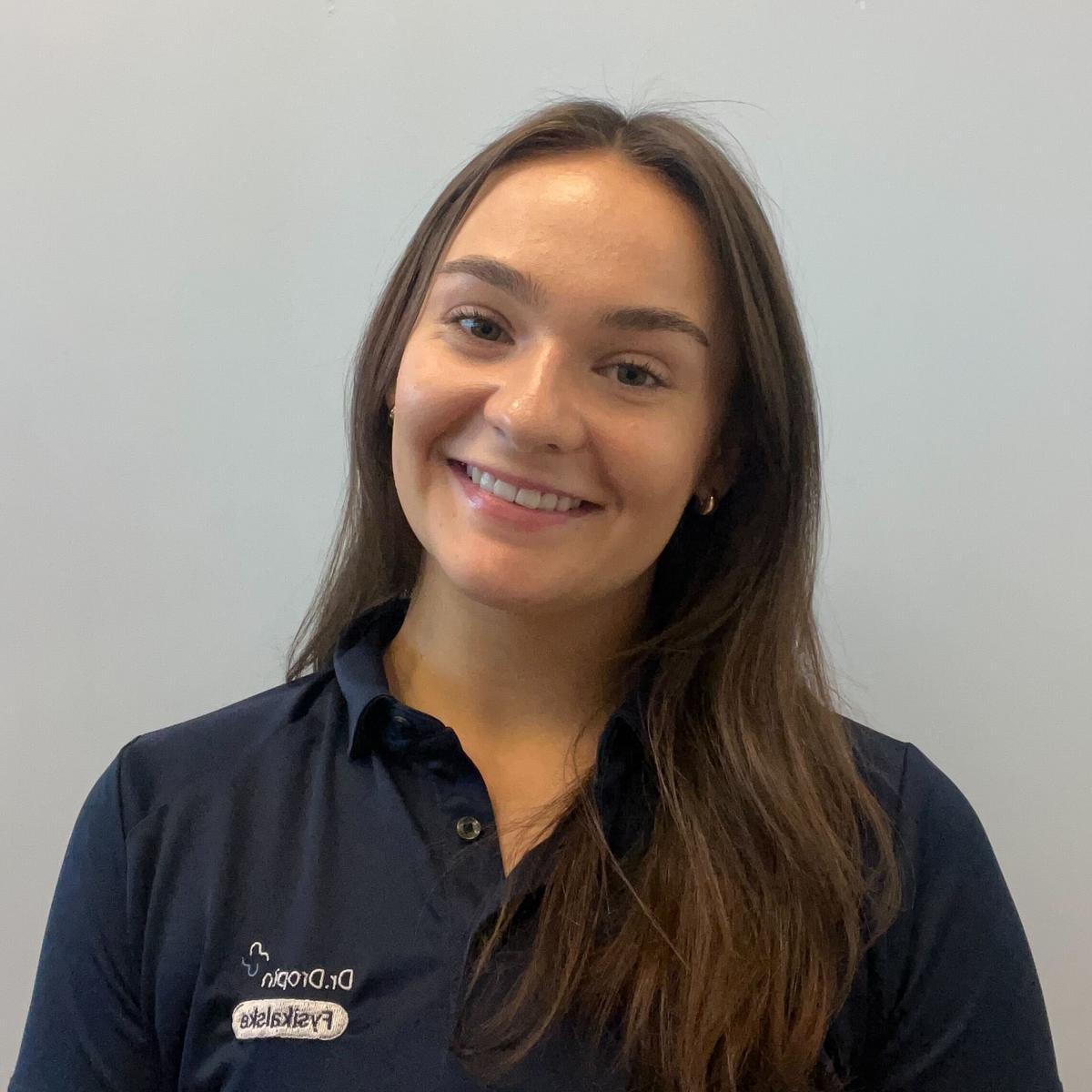
Author: Sandra Moltzau Søgård, physiotherapist at Dr.Dropin Majorstuen. Sandra has a particular interest in knee problems and rehabilitation, and a background in handball. Read more on her profile page.