Acne treatment with a Dermatologist
Get assessment and effective medical treatment for acne from our dermatologists:
- Initial appointment by video or in clinic.
- SMS notification when it's time for a blood test and new prescription.
- Easy online prescription renewal (595 NOK).

How the treatment process works


1. Assessment
You book an appointment by video or in clinic. The dermatologist assesses your skin and develops a treatment plan. At the start, you receive prescriptions and a referral for blood tests.

2. Digital follow-up
The treatment requires regular blood tests. You automatically receive an SMS when it's time for a check-up. You fill out a digital health form, and the dermatologist reviews the test results before a new prescription is issued.

3. Final check-up
Toward the end of the course, you book a new consultation (video or clinic) to evaluate the effect and next steps.
What happens if I experience side effects?
Certain side effects, such as dry skin and dry lips, are expected with systemic acne treatment. When you fill out the digital follow-up form, the dermatologist makes an individual assessment of your answers against the blood test results and the information from your first consultation. For most people, it's safe to continue the course, and the prescription is renewed digitally. Only if the dermatologist determines that the symptoms require a more thorough medical examination will the 595 NOK reservation be cancelled, and you'll be asked to book a regular doctor's appointment.
What happens if I experience side effects?
Certain side effects, such as dry skin and dry lips, are expected with systemic acne treatment. When you fill out the digital follow-up form, the dermatologist makes an individual assessment of your answers against the blood test results and the information from your first consultation. For most people, it's safe to continue the course, and the prescription is renewed digitally. Only if the dermatologist determines that the symptoms require a more thorough medical examination will the 595 NOK reservation be cancelled, and you'll be asked to book a regular doctor's appointment.
Where are the blood tests taken?
The tests are taken at Fürst Laboratories or with your GP. You'll receive a referral from the dermatologist at the start of treatment. The referral is valid throughout the entire treatment course.
Where are the blood tests taken?
The tests are taken at Fürst Laboratories or with your GP. You'll receive a referral from the dermatologist at the start of treatment. The referral is valid throughout the entire treatment course.
Is an in-person visit required?
The assessment and final check-up can be done by video or in clinic. The follow-up itself is done asynchronously via the digital form. If you or the dermatologist see a need for a conversation and examination in clinic or by video, this will be arranged along the way.
Is an in-person visit required?
The assessment and final check-up can be done by video or in clinic. The follow-up itself is done asynchronously via the digital form. If you or the dermatologist see a need for a conversation and examination in clinic or by video, this will be arranged along the way.
How long does the treatment last?
The duration is determined individually by the dermatologist based on clinical response, but a course for severe acne typically extends over several months.
How long does the treatment last?
The duration is determined individually by the dermatologist based on clinical response, but a course for severe acne typically extends over several months.
What is acne?
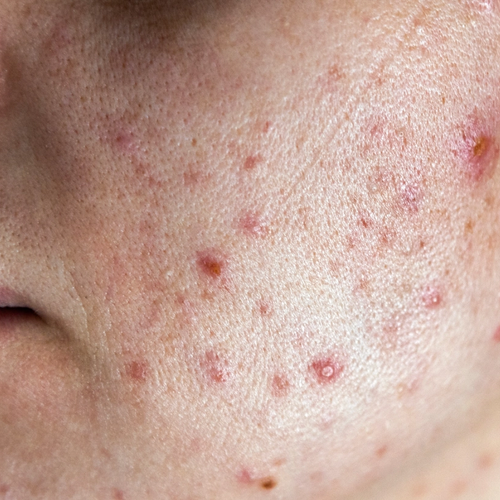
Acne is a common skin condition that occurs when hair follicles become clogged with oil and dead skin cells. This can lead to pimples, cysts, and inflammation.
What is acne?
Acne is a common skin condition that occurs when hair follicles become clogged with oil and dead skin cells. This can lead to pimples, cysts, and inflammation.
What causes acne?
Acne can be caused by hormonal changes, genetics, stress, and the use of certain skincare products. Diet and environmental factors can also play a role.
What causes acne?
Acne can be caused by hormonal changes, genetics, stress, and the use of certain skincare products. Diet and environmental factors can also play a role.
How can acne be treated?
Acne can be treated with various methods, including topical creams, medications, and professional skincare treatments. Treatment depends on the severity of the acne.
How can acne be treated?
Acne can be treated with various methods, including topical creams, medications, and professional skincare treatments. Treatment depends on the severity of the acne.
Are there treatments that work for severe acne?
Yes, there are effective treatments for severe acne, which may include strong medications and specialized skincare treatments. Consult one of our dermatologists for suitable options.
Are there treatments that work for severe acne?
Yes, there are effective treatments for severe acne, which may include strong medications and specialized skincare treatments. Consult one of our dermatologists for suitable options.
Are there any risks with acne treatments?
Yes, some acne treatments can have side effects, such as dry skin or irritation. It is important to discuss potential risks with a dermatologist before starting treatment.
Are there any risks with acne treatments?
Yes, some acne treatments can have side effects, such as dry skin or irritation. It is important to discuss potential risks with a dermatologist before starting treatment.
What are the benefits of professional acne treatment?
Professional acne treatment offers targeted and effective care tailored to your specific needs. Dermatologists have access to advanced treatment methods and can provide personalized advice.
What are the benefits of professional acne treatment?
Professional acne treatment offers targeted and effective care tailored to your specific needs. Dermatologists have access to advanced treatment methods and can provide personalized advice.
How can I know which treatment is best for me?
To find the best treatment for you, consult a dermatologist who can assess your skin condition and recommend the most effective solution.
How can I know which treatment is best for me?
To find the best treatment for you, consult a dermatologist who can assess your skin condition and recommend the most effective solution.
What options are there for severe acne?
For severe acne, stronger treatments may be necessary, including prescription medications and systemic therapies. It's important to consult a dermatologist to find the best solution.
What options are there for severe acne?
For severe acne, stronger treatments may be necessary, including prescription medications and systemic therapies. It's important to consult a dermatologist to find the best solution.
Are there side effects to stronger acne treatments?
Yes, strong acne medications can have side effects such as dry skin, lip and eye irritation, and in some cases, more serious effects. Your dermatologist will inform you of potential risks before starting treatment.
Are there side effects to stronger acne treatments?
Yes, strong acne medications can have side effects such as dry skin, lip and eye irritation, and in some cases, more serious effects. Your dermatologist will inform you of potential risks before starting treatment.
How long does the treatment for severe acne last?
Treatment for severe acne can last several months, depending on how well your skin responds. Regular check-ups with your dermatologist are important to ensure the treatment is working effectively.
How long does the treatment for severe acne last?
Treatment for severe acne can last several months, depending on how well your skin responds. Regular check-ups with your dermatologist are important to ensure the treatment is working effectively.
Who should consider systemic acne treatment?
Systemic treatment is often recommended for those who have tried other acne treatments without success or for those with severe, persistent acne that does not respond to topical treatments.
Who should consider systemic acne treatment?
Systemic treatment is often recommended for those who have tried other acne treatments without success or for those with severe, persistent acne that does not respond to topical treatments.
Can I use other products at the same time as the acne treatment?
It's important to consult your dermatologist before using other skincare products alongside acne treatment. Some products may exacerbate side effects or reduce the effectiveness of the treatment.
Can I use other products at the same time as the acne treatment?
It's important to consult your dermatologist before using other skincare products alongside acne treatment. Some products may exacerbate side effects or reduce the effectiveness of the treatment.
What is pimples?
Acne is a common skin condition that occurs when the hair follicles in the skin become clogged with sebum and dead skin cells. This can lead to inflamed areas on the skin that can vary from small, red dots to larger boils.
What is pimples?
Acne is a common skin condition that occurs when the hair follicles in the skin become clogged with sebum and dead skin cells. This can lead to inflamed areas on the skin that can vary from small, red dots to larger boils.
Why do you get pimples?
Acne can be caused by several factors, including hormonal changes, genetics, stress, diet, and the use of certain skin care products. Hormonal changes during puberty are one of the most common causes.
Why do you get pimples?
Acne can be caused by several factors, including hormonal changes, genetics, stress, diet, and the use of certain skin care products. Hormonal changes during puberty are one of the most common causes.
How can I treat acne?
Acne can be treated with a combination of skin care products, over-the-counter creams, and in some cases prescription medications. Severe cases may require treatment by a dermatologist.
How can I treat acne?
Acne can be treated with a combination of skin care products, over-the-counter creams, and in some cases prescription medications. Severe cases may require treatment by a dermatologist.
What are the best products for pimpels?
The best anti-acne products often contain ingredients such as salicylic acid, benzoyl peroxide, or retinoids. These help reduce sebum production and remove dead skin cells that clog pores.
What are the best products for pimpels?
The best anti-acne products often contain ingredients such as salicylic acid, benzoyl peroxide, or retinoids. These help reduce sebum production and remove dead skin cells that clog pores.
Can diet affect pimpels?
Yes, diet can affect the condition of the skin. Food with a high sugar content or a lot of fat can contribute to increased sebum production and worsening of acne. A balanced diet with plenty of fruit, vegetables and water can contribute to better skin health.
Can diet affect pimpels?
Yes, diet can affect the condition of the skin. Food with a high sugar content or a lot of fat can contribute to increased sebum production and worsening of acne. A balanced diet with plenty of fruit, vegetables and water can contribute to better skin health.
Is it normal to get pimpels in adulthood?
Yes, it is common for adults to also get acne, especially women who may experience hormonal changes related to menstruation, pregnancy or the use of hormonal contraception. Stress and skin care products can also be triggering factors.
Is it normal to get pimpels in adulthood?
Yes, it is common for adults to also get acne, especially women who may experience hormonal changes related to menstruation, pregnancy or the use of hormonal contraception. Stress and skin care products can also be triggering factors.
What can I do to avoid acne scars?
To avoid scarring after pimples, it is important not to squeeze or pick at the pimples. Use sunscreen daily to protect the skin, and consider using products that promote healing and reduce inflammation. Dermatologists can also offer treatments that help reduce the risk of scarring.
What can I do to avoid acne scars?
To avoid scarring after pimples, it is important not to squeeze or pick at the pimples. Use sunscreen daily to protect the skin, and consider using products that promote healing and reduce inflammation. Dermatologists can also offer treatments that help reduce the risk of scarring.
When should I see a dermatologist for acne?
If your pimples don't improve with over-the-counter products or start to cause significant scarring or pain, you should see a dermatologist. Dermatologists can offer stronger treatments and advise on the best way to deal with acne
When should I see a dermatologist for acne?
If your pimples don't improve with over-the-counter products or start to cause significant scarring or pain, you should see a dermatologist. Dermatologists can offer stronger treatments and advise on the best way to deal with acne
Where do I take blood tests for stronger acne treatment?
If you have agreed with the dermatologist to take a blood test at the Fürst laboratory, you only need to show up at Fürst to take the sample. The dermatologist will then be notified when the result is ready. If you do not live in a city that has the Fürst laboratory, you can take the samples from your GP or other general practitioner, then you must inform the dermatologist about this and ask for a blood sample requisition.
Where do I take blood tests for stronger acne treatment?
If you have agreed with the dermatologist to take a blood test at the Fürst laboratory, you only need to show up at Fürst to take the sample. The dermatologist will then be notified when the result is ready. If you do not live in a city that has the Fürst laboratory, you can take the samples from your GP or other general practitioner, then you must inform the dermatologist about this and ask for a blood sample requisition.
I'm pregnant, can I still get treatment for acne?
Yes, you can. But it is a part of the preparations you should not use so it is important to consult a doctor and inform that you are pregnant, then the doctor will find the right treatment that is safe for both you and the child.
I'm pregnant, can I still get treatment for acne?
Yes, you can. But it is a part of the preparations you should not use so it is important to consult a doctor and inform that you are pregnant, then the doctor will find the right treatment that is safe for both you and the child.
Is it dangerous to take antibiotics for as long as you do for acne treatment?
It is not dangerous, but one is anxious about the development of resistance to antibiotics, which means that your own bacteria in the body learn to recognize this antibiotic and develop defence mechanisms so that the antibiotic no longer works.
Is it dangerous to take antibiotics for as long as you do for acne treatment?
It is not dangerous, but one is anxious about the development of resistance to antibiotics, which means that your own bacteria in the body learn to recognize this antibiotic and develop defence mechanisms so that the antibiotic no longer works.
What can I do to prevent/reduce acne breakouts?
What you can do yourself is to be good at washing your face with soap and soap/cleansers that are gentle on the skin and have a pH of around 6.5, use mild products with little fat in them, avoid taking too much on your face and do not scratch up the acne elements. If you have received local treatment from your doctor, it is important to apply this all over your face, and not just where there is an outbreak.
What can I do to prevent/reduce acne breakouts?
What you can do yourself is to be good at washing your face with soap and soap/cleansers that are gentle on the skin and have a pH of around 6.5, use mild products with little fat in them, avoid taking too much on your face and do not scratch up the acne elements. If you have received local treatment from your doctor, it is important to apply this all over your face, and not just where there is an outbreak.
Can acne be contagious?
No, acne is not contagious. The bacterium that helps to aggravate acne is a bacterium that is normally found on our skin, but with acne, it causes a gateway to create infection and an environment is formed in which it thrives well.
Can acne be contagious?
No, acne is not contagious. The bacterium that helps to aggravate acne is a bacterium that is normally found on our skin, but with acne, it causes a gateway to create infection and an environment is formed in which it thrives well.
Dermatologist
Dermatologists can diagnose and treat most skin conditions. Our dermatologists have high expertise and experience from both the private and public sectors. They are dedicated to providing you with the best treatment and making it as efficient as possible for you as a patient. Therefore, we always strive to perform treatment and surgery during your consultation with us. In cases where it is deemed appropriate, we can also assist with referring you to the public healthcare system.
Dermatologist
Dermatologists can diagnose and treat most skin conditions. Our dermatologists have high expertise and experience from both the private and public sectors. They are dedicated to providing you with the best treatment and making it as efficient as possible for you as a patient. Therefore, we always strive to perform treatment and surgery during your consultation with us. In cases where it is deemed appropriate, we can also assist with referring you to the public healthcare system.
What can our nurses help with?
Our skin nurses often assist during the consultation, and in certain treatments will continue the follow-up after you have been with us. This applies, for example, to sweat treatment with injections, where you always have to be first assessed by a dermatologist, but then treated by a nurse, or further treated with warts.
Our nurses also carry out their own treatments which you can book directly with them, for example when removing skin tags, milia or cherry angiomas, or when removing hair growth with our hair removal laser. In cases where the nurse is unsure of the diagnosis, the nurse will recommend that you see a dermatologist instead. You will then not pay for a consultation with a nurse.
What can our nurses help with?
Our skin nurses often assist during the consultation, and in certain treatments will continue the follow-up after you have been with us. This applies, for example, to sweat treatment with injections, where you always have to be first assessed by a dermatologist, but then treated by a nurse, or further treated with warts.
Our nurses also carry out their own treatments which you can book directly with them, for example when removing skin tags, milia or cherry angiomas, or when removing hair growth with our hair removal laser. In cases where the nurse is unsure of the diagnosis, the nurse will recommend that you see a dermatologist instead. You will then not pay for a consultation with a nurse.
When should I use clinic?
You can visit the clinic for any skin disorders, and here you will also have the opportunity to undergo surgery or removal if necessary. Particularly for the examination of moles, other types of spots, or growths, it is recommended to come to the clinic. This also applies to the treatment of scabies. This is done so that the dermatologist can examine you with a dermatoscope or microscope to provide an accurate diagnosis and perform a biopsy if needed. It is also in the clinic where we offer treatments such as laser therapy and PDT (Photodynamic Therapy).
When should I use clinic?
You can visit the clinic for any skin disorders, and here you will also have the opportunity to undergo surgery or removal if necessary. Particularly for the examination of moles, other types of spots, or growths, it is recommended to come to the clinic. This also applies to the treatment of scabies. This is done so that the dermatologist can examine you with a dermatoscope or microscope to provide an accurate diagnosis and perform a biopsy if needed. It is also in the clinic where we offer treatments such as laser therapy and PDT (Photodynamic Therapy).
When should I use picture consultation?
A great many skin disorders can be solved via imaging, such as rashes, eczema, mouth sores, hives, etc. You can also get help to treat acne via a photo, but if you want treatment for severe acne where you have tried most everything else, you should have a consultation with a dermatologist via video or in a clinic. The doctor will be able to write a prescription and give clear advice/instructions for treatment and prevention.
When should I use picture consultation?
A great many skin disorders can be solved via imaging, such as rashes, eczema, mouth sores, hives, etc. You can also get help to treat acne via a photo, but if you want treatment for severe acne where you have tried most everything else, you should have a consultation with a dermatologist via video or in a clinic. The doctor will be able to write a prescription and give clear advice/instructions for treatment and prevention.
When should I use video?
Video is a good way to get help with many different skin disorders, such as acne, rosacea, rashes etc. In the case of moles, the actual picture is even better, otherwise, it is always smart to come into a physical clinic so that we can assess you with a dermatoscopy. In the case of acne and other problems where there is a need to talk more about symptoms and consider treatment, a video would be a good alternative.
When should I use video?
Video is a good way to get help with many different skin disorders, such as acne, rosacea, rashes etc. In the case of moles, the actual picture is even better, otherwise, it is always smart to come into a physical clinic so that we can assess you with a dermatoscopy. In the case of acne and other problems where there is a need to talk more about symptoms and consider treatment, a video would be a good alternative.
Will the dermatology appointment at Dr. Dropin be recorded in my medical records with my regular doctor?
If you wish for your regular doctor to be informed about the topic and content of your appointment with Dr.Dropin, the doctor who treated you will send this information to your regular doctor.
Will the dermatology appointment at Dr. Dropin be recorded in my medical records with my regular doctor?
If you wish for your regular doctor to be informed about the topic and content of your appointment with Dr.Dropin, the doctor who treated you will send this information to your regular doctor.