Tennis elbow and golfer's elbow: course and loading
Tennis elbow causes pain on the outside of the elbow and golfer's elbow on the inside. Both are overload conditions in the tendon attachments, and most people affected are not athletes [1]. The condition is benign and often resolves on its own, and adapting activity gives considerable improvement in more than half [1]. In some people the symptoms last a long time, and the guideline for tennis elbow mentions exercise for the wrist extensor muscles as a measure for symptoms that have lasted for some time [2].
See availabilityWhat are tennis elbow and golfer's elbow?
Epicondylitis is a pain condition in the elbow caused by overload of the tendon attachments, usually after repeated, one-sided movements over time. Tennis elbow, or lateral epicondylitis, causes pain on the outside of the elbow and is about seven times more common than golfer's elbow, or medial epicondylitis, which causes pain on the inside [1].
The names refer to sports, but most people affected are not athletes. NHI mentions tradespeople, office workers, shop assistants and hairdressers, among others. Most patients are between 40 and 65 years old [1]. The term epicondylitis suggests inflammation, but research mostly points to wear combined with tissue irritation, and many professionals therefore prefer epicondylalgia [1].
What does it feel like?
Typical symptoms are a dull ache or pain on one side of the elbow, most often the outside, radiating down towards the wrist. The pain comes with gripping and lifting objects of some weight [1].
Everyday tasks such as pouring, holding a cup or working with the hand can become difficult. Some have mild symptoms for months before seeing a doctor [1]. Pain on the inside of the elbow is golfer's elbow, and is caused by changes in the tendons of the finger and wrist flexor muscles [1].
How is the diagnosis made?
At the examination the tendons and their attachments are tested [1]. The guideline for tennis elbow emphasises the history, examination and special tests, and stresses that other causes of pain on the outside of the elbow must be excluded. It rates the evidence for the special tests as weak [2].
Blood tests and X-rays are usually of no value unless other causes need to be excluded [1]. Imaging is not required to make the diagnosis, but can be relevant when non-surgical treatment does not succeed [2]. Other conditions that can cause pain on the outside of the elbow include nerve problems from the neck and entrapment of a nerve in the forearm [2].
What do the sources say about loading and treatment?
NHI recommends adapting activity at work and in leisure time during the first three months and avoiding loading that causes considerable pain. Mild discomfort is regarded as harmless [1]. For symptoms lasting longer than three months, physiotherapy can be relevant, and you can book an appointment yourself without a referral [1]. Aids mentioned are a wrist brace, an elbow strap and taping for athletes, as well as daily exercises to keep full wrist mobility [1].
The guideline for tennis elbow recommends resisted exercises for the wrist extensor muscles for subacute and long-lasting symptoms, with a moderate grade of evidence. The exercises can be isometric, concentric or eccentric [2]. Mobilisation or manipulation of the elbow can be used for a short-term effect on pain, and dry needling is recommended for pain and function [2]. Ultrasound as the only treatment is not recommended [2].
NHI describes the effect of shockwave therapy, acupuncture, laser and TENS as uncertain, and states that more research is needed. PRP injections have not shown a clear effect [1]. Surgery is considered for symptoms that have lasted for more than a year without effect from other treatment [1].
How long does it take?
The sources give different pictures. NHI states that the condition is benign and often resolves on its own, and that 8 to 9 out of 10 are expected to recover within a year after usual treatment without surgery [1].
The guideline describes the condition as potentially troublesome. Some recover quickly and completely, while many have persistent pain or recurrence. In studies from general medical care, more than half still had symptoms after one year, and about 30 percent were on sick leave, on average for around 12 weeks. It is difficult to predict the long-term course for the individual [2].
When should you contact a doctor?
NHI recommends contacting a doctor if the symptoms last more than three months or affect work ability and daily activities, if the symptoms do not improve on their own, and in case of severe pain or an uncertain diagnosis [1].
When can it be relevant to book an appointment with us?
A physiotherapist can examine the elbow, look at what loads it and make a plan for adapted loading and exercises together with you. When the diagnosis is uncertain, diagnostic ultrasound can be relevant. You can read more about tennis elbow and golfer's elbow on our pages about conditions.
See availabilityFrequently asked questions about tennis elbow and golfer's elbow
What is the difference between tennis elbow and golfer's elbow?
Tennis elbow causes pain on the outside of the elbow, golfer's elbow on the inside. Tennis elbow is about seven times more common [1].
How long does tennis elbow last?
It varies. NHI states that 8 to 9 out of 10 are expected to recover within a year without surgery [1], while the guideline shows that many have persistent symptoms or recurrence [2].
Should I rest my arm with tennis elbow?
NHI recommends adapting activity and avoiding loading that causes considerable pain, and describes mild discomfort as harmless [1]. The guideline discusses exercise of the wrist extensor muscles for symptoms that have lasted for some time [2].
When should I see a doctor about elbow pain?
For symptoms lasting more than three months, affecting work or daily life, in case of severe pain and when the diagnosis is uncertain [1].
Read more
The page about tennis elbow and the page about golfer's elbow describe the conditions and common treatment methods. You can find more articles in the overview of articles.
Sources
This article was written by Dr.Dropin Fysikalske and is based on the sources listed below. It gives general information and does not replace an examination by a healthcare professional.
The websites were accessed and read on 22 October 2026.
1. Tennisalbue og golfalbue (epikondylitt) (Tennis and golfer's elbow, epicondylitis). NHI.no. Last updated 6 April 2025. Link and treatment
2. Lucado AM, Day JM, Vincent JI, MacDermid JC, Fedorczyk J, Grewal R, Martin RL. Lateral elbow pain and muscle function impairments: clinical practice guidelines. J Orthop Sports Phys Ther. 2022;52(12):CPG1-CPG111. doi:10.2519/jospt.2022.0302. Link
About the author
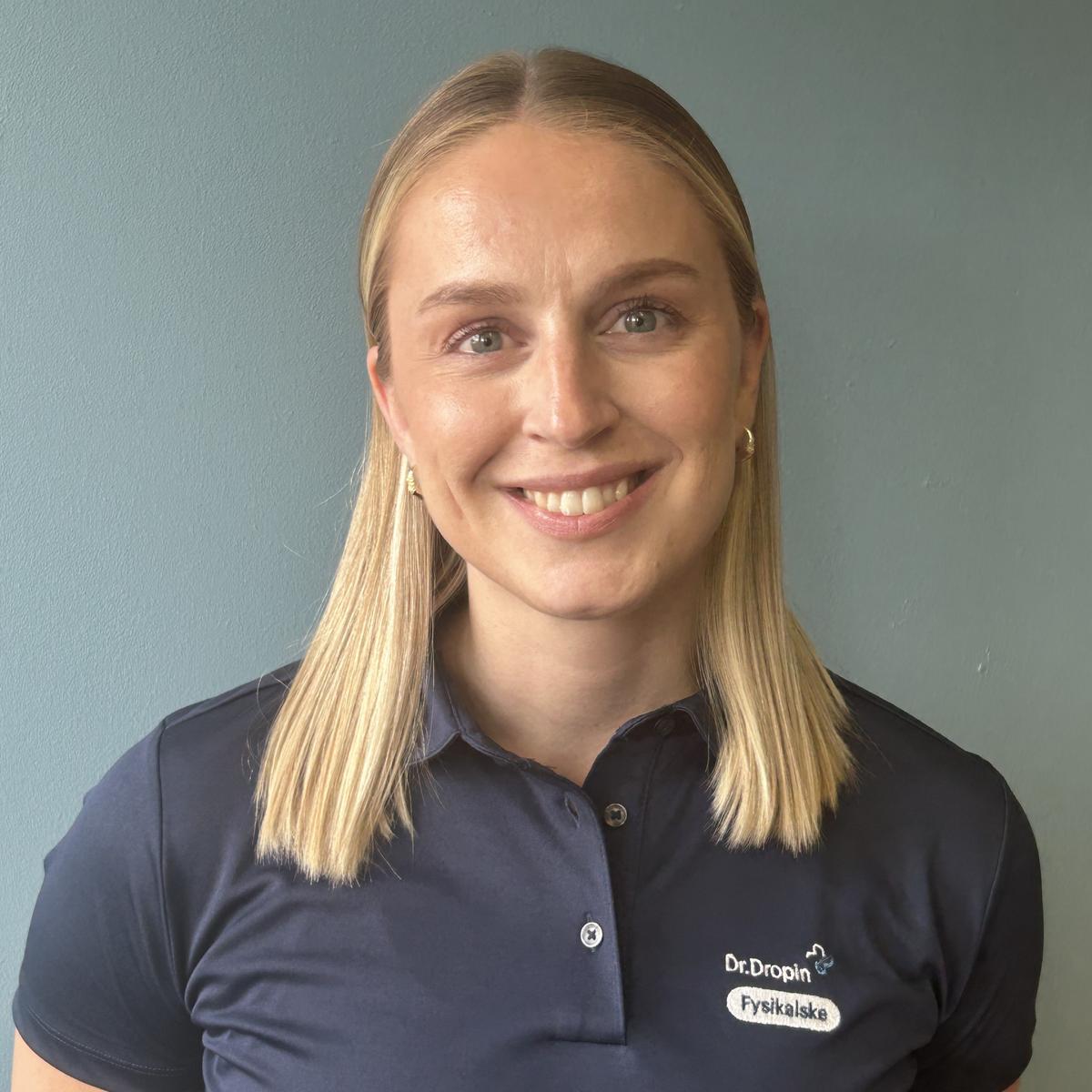
Author: Maren Kjølstad, physiotherapist at Dr.Dropin Sandvika Stasjon. Maren has experience with elbow problems such as lateral and medial epicondylitis, known as tennis elbow and golfer's elbow. Read more on her profile page.