
Women's health

Our physiotherapists can help you with a number of problems related to the pelvis, abdomen and pregnancy. We meet you with understanding and empathy, and work interdisciplinary to ensure that you get the help you need.

  • No referral
  • Professional expertise
  • Physically in the clinic or over video
Check availability

Why work out during prengancy?

Exercise is a safe and effective way to reduce pregnancy ailments. Research shows that pregnant women who exercise can experience easier pregnancies, less complicated births, recover faster after birth, have better self-esteem and become less depressed. Physical activity during pregnancy prevents high blood pressure, reduces the risk of preeclampsia and gestational diabetes. In addition, exercise can provide better mood, more energy, better night's sleep and, not least, there are many documented health benefits for the child in the womb.

Adapt to daily fitness, add extra breaks if necessary. The best workout is the one that feels best to you.

sanity imagesanity image

Core

It has long been a myth that you cannot train your abdominal muscles during pregnancy and that sit-ups can contribute to the development of diastasis (divided abdominal muscles).

By training your core and abdominal muscles, you can reduce back and pelvic pain because, among other things, you help to stabilize the back and pelvis and reduce the strain caused by increased weight and a change in the center of gravity when the belly grows. Furthermore, you will build up a muscle memory which means that you will recover more quickly after giving birth.

Side plank

Lie on your side with your lower leg bent and support yourself on your elbow. Activate the abdominal muscles and raise the pelvis off the floor until the body is straight. Then lift the top leg up towards the ceiling, slowly lower down and finally lower the pelvis back down to the mat.

Sideplanke

Stand on one part of the bungee cord and attach the grip to one handle. Lower your upper body to this side and pull to the opposite side. Your back should be straight and you should not lean forward during the movement.
Lighter: Without weight
Heavier: With elastic band or manuals

Stående sidebøy

Sete, hofte og lår

Why
The muscles in the seat, hip and thigh play an important role in maintaining balance and stability. This is particularly important during pregnancy when the body's center of gravity and posture change. Most people get weaker in the gluteal muscles as their stomach grows. In addition, it is important to be strong in the muscles of the legs. The body gradually becomes heavier, which places greater demands on the leg muscles. After all, it is the legs that transport us around every day!

Can be done on a bozu ball, bench, chaise longue on a sofa or on your back on a mat if it feels right. Lie with the upper part of your back on the ball. Find the neutral position in the back and pelvis, tighten the core and lift the pelvis up to horizontal position. Slowly lower back and repeat.

Seteløft

Keep your legs hip-width apart, tighten your core and sit down as if you were going to sit on a chair. Make sure that your knees and feet point in the same direction and that your knees do not go further forward than your toes. Press down into your heels and lift yourself back up. Pinch the seat and strain the core at the top.

Knebøy

Place a mini-band around your ankles and stand in a wide-legged position so that you get good tension in the mini-band. Bend slightly at the hips and knees and place your hands on your hips. Walk sideways at the same time as you constantly maintain a tension in the elastic, as well as a slight bend in the hips and knees. Tighten your stomach and back to keep the upper body still.

Sideveis gange

Stand with your legs together and put your arms at your sides. Lift one leg and take a good step backwards while falling backwards. When the leg hits the floor, slow down the movement until the body is in a deep position. Kick off and return to the starting position.

Easier: Stand with the back leg further forward
More difficult: With weight. Manuals or barbell.

Utfall bakover

Stand with your side to a step/platform. Place your foot on the step and lift yourself up with your weight on this leg. Complete the movement by lifting the other kneel up in front of you. Avoid kicking off with the back foot and be careful that the knee points in the same direction as the toes of the front the leg.

Sideveis step-up

Skuldre, rygg og armer

Breasts get bigger during pregnancy. This affects the neck, shoulders and upper back. It is important to be strong in these muscles to prevent discomfort when the baby is here. Bathing, lifting, carrying and breastfeeding is a great effort for the arms, shoulders and upper back.

Attach the elastic to a door handle or similar at a height between the hip and shoulders. Stand with your legs apart, a handle in each hand and face the anchor point. Keep your arms straight out from your body and pull the handles towards you while keeping your upper arms horizontal at shoulder height. In the final position, the elbows point straight out to the side and the shoulder blades are drawn together. Take it easy back.

Stående roing

Hold the elastic straight in front of you (as if it were a bow and arrow). Tighten the elastic by bringing one arm backwards while turning your upper body slightly, until the elbow points straight back. Hold the position for a few seconds and slowly release back to the starting position. Repeat.
Lighter: Without elastic
Heavier: With stem elastic

Pil og bue med rotasjon

Stand upright, fix the abdominal and lower back region and hold a rubber band or dumbbell in your hand at shoulder height. The back of the hand faces backwards. Raise the dumbbell above your head until your elbow is straight. Slowly lower back down. The elbow points out to the side throughout the movement.

Lighter: Without elastic or weight
Heavier: With elastic band or manual

Enarms skulderpress

Pelvic floor

A number of complaints women experience are linked to too tight pelvic muscles. These ailments often lead to pain and discomfort in the abdomen and vagina. Up to a third of all women also experience problems such as urinary leakage or uterine prolapse, as a result of weak pelvic floor muscles.

By training the pelvic muscles, you can get a better function in the pelvis and reduce discomfort and pain related to pelvic floor problems. Do you want to learn more about the pelvic floor and how our physiotherapists can help you?

Read more here

Pinch the pelvic floor mucosa in and up. Make sure you relax your stomach, thighs and seat. Hold the contraction for 8 seconds before releasing and taking a few deep breaths. It is important to relax well between contractions. Do the exercise (8 second squeeze and breath pause) 10 times. As a start, you should do this three times a day for 4-6 months. You can then maintain the pelvic floor by doing crunches once a week for 3x10 repetitions.

30% squeeze incorrectly. In the worst case, this can worsen the symptoms. It is important to do the exercise correctly to get the effect of the training. If you are unsure, we can help you via video or in the clinic. It is recommended to do a vaginal examination to check if you squeeze correctly. Please watch the video on the right and this guide to do the exercise correctly.

KnipeøvelserKnipeøvelser
Knipeøvelser

New: Physiotherapist on video!

Through video consultation, we can give you advice and guidance on pain and ailments. You meet skilled physiotherapists who will assist you with much of what you can get help with in a normal physiotherapy session.

The majority of all consultations we normally have in the clinic can be carried out on video. Going to a physiotherapist is not necessarily about physical treatment. The conversation and mapping of the medical history is the most important thing the physiotherapist needs to provide the right treatment.

The physiotherapist can evaluate your condition, advise, guide and suggest next steps. Based on your diagnosis and individual needs, the physiotherapist will draw up a treatment plan for you.

If your condition requires a physical examination, doctor's check-up or ultrasound, the physiotherapist will refer you to the right place. If you do not find your condition on the list below, you can safely book a video appointment.

Read more about how video consultation works

sanity imagesanity image

We can help you with

Adapted training for pregnant and new mothers

With the right follow-up, guidance and, not least, training, pregnant and new mothers can prevent and prevent lasting injuries.

Physical activity is important during pregnancy. HelseNorge recommends that all pregnant women stay physically active as it has a positive impact on the health of mother and child. All pregnancies are different: Dr. Dropin Fysikalske has experienced physiotherapists who can guide you, set up an exercise program and monitor you during and after pregnancy. We will make sure that you feel safe and looked after during a wonderful but vulnerable time in your life.

Infants and parents

After giving birth, women are exposed to wear-and-tear injuries in the muscles and bones. Our physiotherapists have extensive experience with exercises and carrying techniques to treat and prevent wear and tear injuries, prevent abdominal pain and reduce stress.

In addition, our physiotherapists have special expertise in infants' motor skills (0-12 months) and their stages of development. Through our expertise, we will be able to map the child's development and take measures if the child is not developing as normal. We can also offer treatment advice in connection with abdominal pain and colic, sleep difficulties and lying position.

Pelvic floor problems

It is common to have pelvic pain during and after pregnancy. This does not mean that the pain should be dismissed or that one should not take the pain seriously. 62% of all pregnant women are reported sick due to ailments related to pregnancy, and pelvic joint pain is one of the most common causes. Our therapists can assist in loosening the muscles for immediate pain relief, assist with exercise programs and facilitation for rehabilitation and prevention of pain before and after birth.

Pelvic floor examination

Get to know our therapists better

We know that the right competence and good chemistry are important. Below you can therefore get to know our therapists better. We hope this makes it easier to find a therapist who is right for you.

FysikalskeFysikalske
Fysikalske

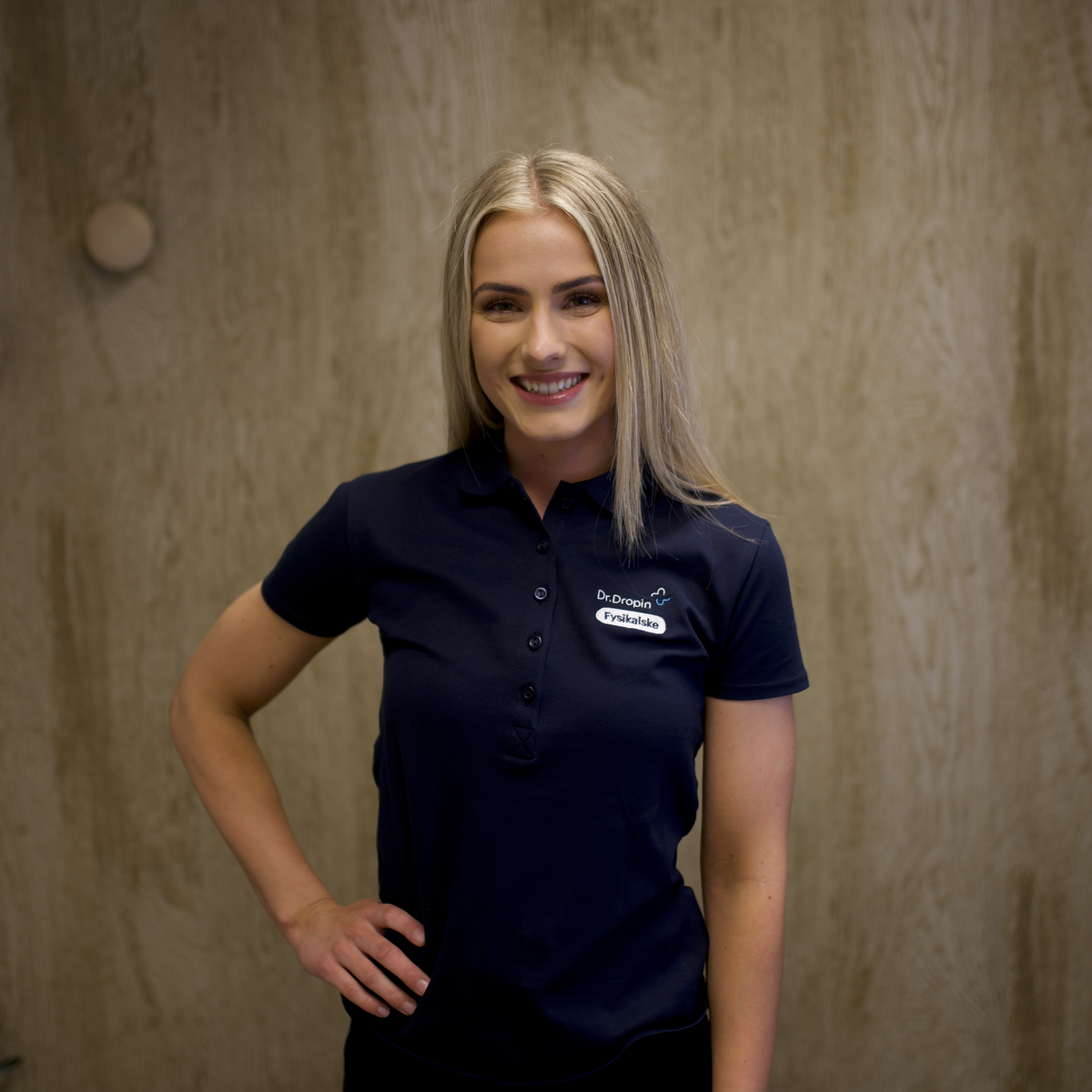
Physiotherapist and PT Ida

Ida examines and treats a wide range of musculoskeletal disorders, with particular interest in problems in the back, neck, hips, knees and ankles. She finds it extra rewarding to work with sports and work-related injuries, rehabilitation after surgery and preventive measures.

As Personal Trainer she can help you achieve small or large goals in everyday life. Ida adapts the training to your level. Among other things, she has experience with cross-country skiing, running and dancing. Among other things, she can help you maintain or improve strength, mobility and endurance, optimize technique or sport-specific exercises.

Ida meets you with a good mood and a holistic approach where your health is at the center.

Additional services which Ida offers:
✓ Shock wave therapy
✓ Personal Trainer
✓ Foot analysis (3D-scan) and custom orthotic insoles

Where can you book an appointment with Ida?
📍 Bislett

sanity imagesanity image

Physiotherapist and PT Therese

Therese treats musculoskeletal disorders in children and adults, with particular interest in exercise and work-related disorders, dizziness and headaches. She also works a lot with the neck, shoulder, hip, knee and foot. Therese also has experience with ailments after undergoing pregnancy.

As Personal Trainer, she is committed to both beginners and experienced. She herself has competed in athletics and CrossFit daily. Therese focuses on the right technique, individual training plans, injury prevention measures and long-term progression. At Therese, you will experience a wonderful combination of professional skill and commitment.

Additional services which Therese offers:
✓ Shock wave therapy
✓ Running analysis
✓ Personal Trainer

Where can you book an appointment with Therese?
📍 Bislett

sanity imagesanity image

Questions and answers

Here you will find answers to common questions. This is general advice. If you are unsure whether the answers apply to you, we are happy to help you with an individual examination and advice, either on video or in one of our clinics.

What is pelvic floor training?

Pelvic floor training is strength training of the pelvic floor muscles, the muscles in the pelvic area. This training helps improve the function of the muscles and can be used as a treatment or prevention for pelvic organ prolapse or urinary incontinence.

What is vaginismus?

Vaginismus is a condition where the pelvic floor muscles tighten and make it difficult or impossible to insert anything into the vagina, including tampons, medical instruments, and the penis.

Can women with vaginismus have children?

Women with vaginismus can become pregnant, but it may be more challenging to achieve due to pain or difficulties with intercourse. However, there are treatment options available that can help manage vaginismus and make it easier to conceive.

Can women with vaginismus give birth vaginally?

Women with vaginismus can give birth vaginally, but it may require extra effort and support from healthcare providers to help them relax and open their pelvic floor muscles.

Can vaginismus be cured?

Yes, vaginismus can be treated and managed through a combination of therapy, pelvic floor exercises, medications, and other treatment options. Many individuals experience significant improvement or full resolution of their symptoms with appropriate treatment.

Can pelvic girdle pain (pelvic instability) be prevented?

It is not always possible to prevent pelvic girdle pain, but there are measures that can help reduce the risk and alleviate pain. These may include regular exercise, ergonomic considerations, and lifestyle adjustments.

How do you know if you are exercising the pelvic floor correctly?

A correct pelvic floor contraction should feel like you are tightening around the rectum, vagina, and urethra, combined with a sensation of drawing the muscles inward and upward. You can place a hand on the perineum (the area between the vagina and anus) and feel it lift slightly. Alternatively, you can insert a finger into the vagina and feel the muscles squeezing around it. There should be no downward pressure. The pelvic floor should be trained in isolation while simultaneously relaxing the gluteal muscles, abdomen, and inner thigh muscles.

What can pelvic floor training do for individuals with endometriosis?

Pelvic floor training helps stimulate circulation in the pelvic area. Many individuals with endometriosis may experience pain in the pelvic region due to muscular tension in and around the pelvis over time. Pelvic floor exercises can help alleviate this tension and improve overall muscle function and blood flow in the pelvic area.

How often should one exercise the pelvic floor muscles?

After childbirth, it is recommended to exercise the pelvic floor muscles daily for the first 4-6 months. As a treatment for pelvic organ prolapse or urinary incontinence, daily training for 6 months is recommended. After that, you can transition to maintenance training once a week. Generally, 3 sets of 10 repetitions are recommended, but individualized approaches may be necessary for specific needs.

Can pelvic floor training help with urinary incontinence?

Yes, pelvic floor training is considered the first-line treatment for urinary incontinence. Studies have shown that 74% of women with urinary incontinence experienced improvement after engaging in pelvic floor strengthening exercises.

What is pelvic organ prolapse?

Pelvic organ prolapse is a condition where the bladder, uterus, or rectum sag into or protrude against the vaginal wall. It can feel like a sensation of heaviness in the pelvic area or a feeling of having something in the vagina. Some people may also visually observe the prolapse when examining the pelvic area with a mirror. Pelvic organ prolapse is also referred to as pelvic organ prolapse or genital prolapse. It's important to note that pelvic organ prolapse is distinct from a herniated disc (back prolapse) and they are not the same condition.

What is the pelvic floor muscle?

The pelvic floor muscles are the muscles that form the "floor" of the pelvis. These muscles surround structures such as the urethra, vagina, and rectum. They play a crucial role in supporting the pelvic organs, controlling urinary and faecal continence, and providing stability to the pelvic region.

How can we who do not live in Oslo or have Dr.Dropin nearby get help?

Dr. Dropin also offers video consultations. You do not get to carry out a physical examination, but you can get a lot of useful information and guidance. You can read more about video consultation here, and download the app to book an appointment with Martine (Klinikk Hegdehaugsveien). At fysio.no, quintet.no and vulva.no, there is also a list of physiotherapists and health personnel throughout the country who work with this.

Can regular physiotherapists do a pelvic floor examination?

No, only physiotherapists are specialized in education and training in pelvic floor examination. It is not "ordinary" physiotherapeutic knowledge. At Dr.Dropin, it is currently only Martine at the Hegdehaugsveien clinic who offers a pelvic floor examination.

What should you do if you think you have vaginismus? Is it something you can do yourself?

It is important that you are examined by a gynaecologist to rule out other medical conditions, for example, infections, skin diseases etc. There is a lot you can do on your own. Part of the treatment is about information and understanding of the problem. Many people get better from just that. You can read more about the condition at vulva.no and here.

I have uterine prolapse. Can a pelvic floor exam help me?

It is recommended to carry out a pelvic floor examination to examine the strength and function of the pelvic floor muscles. Continuous strength training of the pelvic floor is always the first measure we work on, both for abdominal prolapse and incontinence. Research shows that 74% get fewer prolapse symptoms after 6 months of continuous and guided pelvic floor training, which is a very good prognosis.